









Important terms and definitions in construction projects
Understand the most important terms in a construction project. A practical guide for everyone in the property industry.
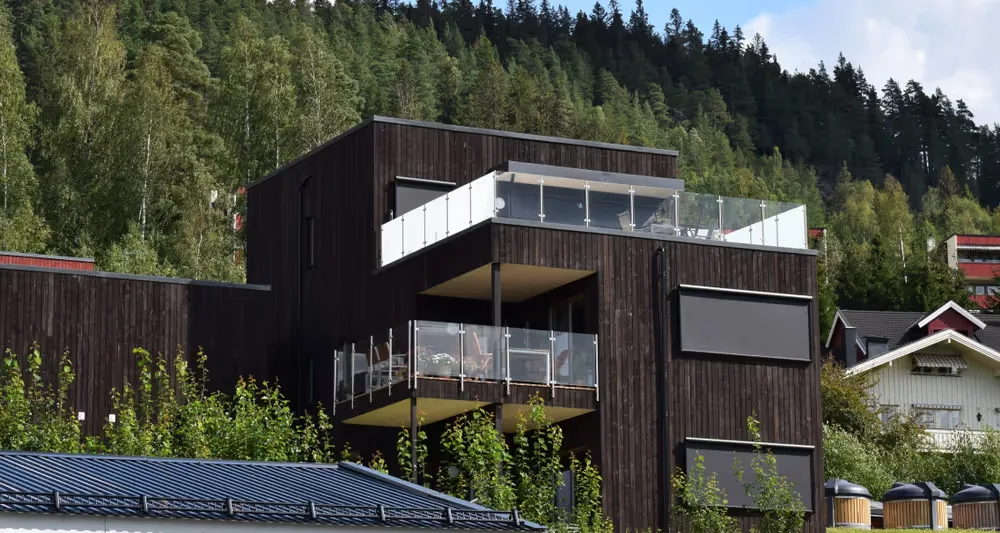
There are many different roles and people involved in a construction project. This article looks at the various parties that may be involved in a project, and their role.
Design and planning (prosjektering)
Good planning ahead of a construction project is important. Before the work can begin, there must be an accurate description of how it is to be carried out, drawings must be prepared and calculations made to ensure a safe, lawful and quality-conscious result. A contractor may not begin any work until the design and planning has been documented.
Client (byggherre)
The client (byggherre, also called tiltakshaver) is the owner of the property on which the work is to be carried out. It is the client who commissions and pays for the work, and in most cases owns the finished building. This may be an individual, for example the landowner or someone building under an agreement with the landowner. It may also be a company or an organisation. Plan- og bygningsloven (the Norwegian Planning and Building Act) §23-2 uses the following definition “The project owner under this Act is the person or enterprise on whose behalf the project is carried out”.
Contractor (entreprenør)
Those who take on responsibility for carrying out building and construction work. They may be bricklayers, groundworkers, carpenters, electricians, plumbers, etc. As a starting point, the contractor is only responsible for carrying out the work the client has designed.
Design-and-build contractor (totalentreprenør)
If the contractor takes on responsibility for both designing and carrying out the work, he is called a design-and-build contractor. In such cases the client only needs to describe what work he wants the design-and-build contractor to design and carry out. The design-and-build contractor chooses both the construction method and the materials, and is responsible for ensuring that the result fulfils the described function.
Subcontractor and design-and-build subcontractor (underentreprenør and totalunderentreprenør)
If a contractor has agreed to carry out a job and chooses to bring in another contractor to do part of the work, the one who takes on that work is called a subcontractor. If the subcontractor also designs the work, he is called a design-and-build subcontractor.
Parallel contractor (sideordnet entreprenør)
If a client engages two or more contractors working at the same time on the same construction project, they are parallel to one another and are often called parallel contractors.
General contractor, main contractor and similar
General contractor (generalentreprenør) and main contractor (hovedentreprenør) are people who have particular roles in a construction project. A contractor may be responsible for the entire project and hire subcontractors for parts of the work. The contractor is then often called a main contractor or general contractor. This indicates which contract structure the client has chosen.
Consultant (konsulent)
In the construction industry, a consultant is an adviser in project management, construction management and building engineering. One example of a consultant’s task may be design and planning, which involves descriptions, calculations and drawings of planned work.
Norsk standard / NS
Norsk standard (Norwegian Standard), abbreviated NS, is a standard developed and published by Standard Norge. They produce documents for building and construction projects. The documents may be referred to as Norsk Standard XXXX or NS XXXX.
Standard Norge has the exclusive right to establish and publish NS. It is also quality and environmentally certified.
Project owner, responsible applicant, designer, contractor and inspector
Anyone carrying out building and construction work in Norway is obliged to follow plan- og bygningsloven (the Planning and Building Act), byggesaksforskriften (the Building Applications Regulations) and teknisk forskrift (the Technical Regulations).
The project owner (tiltakshaver) is the person who wants to start a construction project. Such a project is referred to as a measure (tiltak).
If the measure requires an application (søknadspliktig), the project owner must engage a person or company with responsibility rights (ansvarsrett) to hold the role of responsible applicant (ansvarlig søker), who is responsible for collecting, preparing and submitting the necessary documentation to the municipality and from the municipality.
The project owner must also engage a person or company that can hold the role of responsible designer (ansvarlig prosjekterende), responsible contractor (ansvarlig utførende) and responsible inspector (ansvarlig kontrollerende) for the various disciplines. If there are several measures, the project owner is required to engage someone with responsibility rights who can hold the role of independent inspector (uavhengig kontrollerende).
Read more
Abbreviations for home and plot area
Confused by BRA, BTA, BOA and P-ROM? Here is an overview of the most common area abbreviations.
TechnologyHow docs.placepoint.no works
Placepoint publishes 1,200+ pages of product documentation in Norwegian and English without manual writing. This is how the pipeline behind docs.placepoint.no works.
NewsPlacepoint acquires Sweden’s Combify in its third acquisition and steps into Sweden
The Norwegian decision platform for property is entering the Swedish market and stepping up the consolidation of Nordic proptech.